It has been more than two years of what feels like constant war and crisis and even though the people of Jerusalem are used to these cycles, it doesn’t seem to get easier. The Jerusalem Foundation continues to support the people of Jerusalem though this time. Even though emergency response has become almost normal routine, the most vulnerable in the city, marginalized communities, children, families, all need help.
Faces of resilience
“I wish I could share with you the joy on the faces of the children in the shelters when the performers are acting and singing and the gratitude of the Jerusalem artists to have meaningful work to do during this time and the pride of the SAHI youth hesed patrol distributing food and supplies to isolated elderly and families in need,” shared Arik Grebelsky, President, Jerusalem Foundation, from Jerusalem. “The Iranian missiles are falling on all population groups indiscriminately and we are making sure to take care of everyone in Jerusalem, religious and secular, Jewish and Arab. There is special meaning knowing that we are all in this together.”
Transforming fear into connection
In community shelters, Jerusalem Foundation volunteers and sponsored local artists are transforming fear into connection. Youth volunteers quickly move through neighborhoods delivering food packages to isolated elderly residents and to families struggling due to recently lost income.
Meeting critical needs across the city
Isolated seniors in the Muslim and Christian Quarters of the Old City require food delivered directly to their doors. Families in East Jerusalem need groceries and activity kits to help children cope with long days indoors. Community centers in ten distinct neighborhoods are operating extended shelter programming, distributing creative materials, providing WiFi, heaters, blankets, and safe gathering spaces for families and others spending long hours in protected rooms.
Living with the sound of sirens
Alexa Neville of the Jerusalem Foundation recently reflected on her family’s experience in Three Generations of Sirens – Musings from a Shelter, writing: “I am one of the ‘lucky’ ones with an ‘en-suite’ sealed room in our home. Our children and grandchildren fled their unprotected homes to be with us.”
“And yet three generations of sirens take their toll. My children who grew up in the shadow of the Second Intifada. My new-immigrant daughter-in-law who is constantly anxious about the potential for disaster. And my 5-year-old grandson who copes with his stress by mimicking a siren perfectly but chillingly.”
“Even when the air goes still, the siren leaves behind a bitter residue of dread that settles deep in the marrow of the bones,” Neville concludes.
Supporting families and essential services
Emergency daycares are caring for the children of medical teams and essential workers, so hospitals and critical services continue to function. Women’s shelters and transitional apartments are expanding therapeutic and emotional support as stress intensifies, and new needs arise. Adults with severe physical disabilities require reinforced staffing and adapted safe spaces. Parents across the city are turning to online trauma support services for guidance on how to help children struggling with anxiety and behavioral changes.
Culture as comfort and connection
Culture, as always, is a part of the Jerusalem Foundation response. Online literary events, therapeutic writing workshops, and small theatrical performances in shelters are offering moments of light and emotional release while schools remain closed.
Everyday courage and hope
Life in Jerusalem right now is a mix of alertness and everyday courage. Even with the sirens and uncertainty, people look out for each other. Kids still laugh in shelters. Artists keep creating. Volunteers keep helping. Day by day, the city goes on – together, supporting one another, with hope for the future.
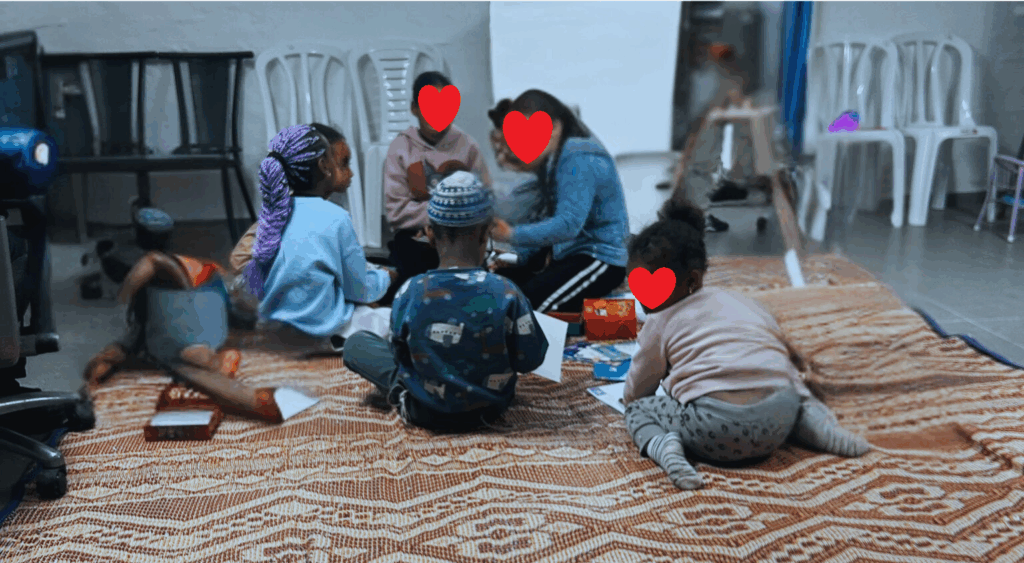
Children doing activities in a bomb shelter (Kiryat Menachem)
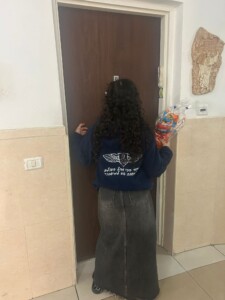
SAHI volunteer delivering food to a family in need
Children of emergency workers being entertained in a bomb shelter.